Efficiency first where it fits
IE3 and IE4 motor options are reviewed against duty cycle, expected annual hours and VFD compatibility so the payback model does not ignore thermal risk.
Sustainability
Energy reduction in motor systems works only when the line still starts, accelerates and cools correctly. Siemens Motor sustainability support focuses on IE3 and IE4 replacement planning, VFD speed control for variable loads, repair-versus-replace decisions and documentation that maintenance teams can defend.
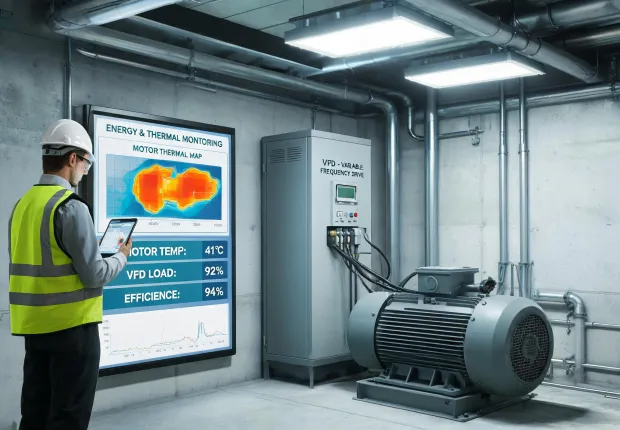
That means measuring load, speed range, duty cycle and service access first, then choosing the right motor and converter combination.
IE3 and IE4 motor options are reviewed against duty cycle, expected annual hours and VFD compatibility so the payback model does not ignore thermal risk.
Fans and pumps are assessed for SINAMICS speed control where process demand varies. The review includes minimum speed cooling and cabinet environmental limits.
Standardized spares, clear starter settings and documented nameplate records reduce emergency substitutions and help plants avoid premature scrap.
A sustainability request begins with the existing motor population, not a generic upgrade promise. We ask which motors run continuously, which are oversized, which are controlled by dampers or valves, and which loads create nuisance trips during startup. The review then separates constant-speed duties from variable-flow applications where a VFD can reduce energy use. For each candidate, we check insulation class, cooling at low rpm, bearing current mitigation, overload behavior and the documentation needed for local maintenance records.
The final recommendation may be an IE4 replacement, a VFD retrofit, a better starter setting, or no change at all if the duty is already efficient and reliable. This conservative approach keeps the sustainability program credible with plant engineers who must protect production while reporting measurable kWh reductions.
Share operating hours, speed profile and current nameplate data. We will help identify where efficiency upgrades make engineering sense.
Start efficiency review